Why Oakland Termites Thrive Here More Than in San Francisco
Oakland sits in a termite hotspot that San Francisco simply doesn't share. The reason isn't just luck or bad timing. It comes down to three factors: climate, soil composition, and the age of our housing stock.
San Francisco's cooler marine layer, fog, and proximity to the bay create conditions that termites find less hospitable. The city's soil is also more compacted and less inviting to subterranean termite colonies. Oakland, by contrast, sits inland where summers are warmer and drier. Our neighborhoods have more pockets of ideal termite habitat: loose soil, moisture from aging plumbing, and wooden structures that predate modern construction standards. Termites don't care about your property value or your plans for the weekend. They care about food, water, and shelter. Oakland delivers all three in abundance.
The age of Oakland's homes compounds the problem. Many houses built in the early 1900s through the 1970s lack proper termite barriers, adequate ventilation, or treated lumber. These older structures are like an all-you-can-eat buffet for termite colonies. A single colony can contain hundreds of thousands of workers, each consuming wood 24 hours a day. The damage accumulates silently, often undetected until a home inspection or a sagging floor reveals the extent of the problem.
Signs of Termite Damage: What Every Oakland Homeowner Should Know
Spotting signs of termite damage early can save you tens of thousands of dollars. Termites are silent destroyers, but they do leave clues. The trick is knowing what to look for and acting fast when you find them.
The most obvious sign is mud tubes. Subterranean termites build pencil-thin tunnels of mud along foundation walls, basement beams, and crawl space joists. These tubes serve as highways between the soil and the wood above. If you see them, termites are actively feeding. Other visible signs include hollow-sounding wood when you tap it with a screwdriver, blistered paint or finish on wooden surfaces, and small piles of sawdust (called frass) near baseboards or under windows. You might also notice swarmers, which are winged termites that emerge in spring to find new colonies. A swarm inside your home is a red flag that an established colony is thriving nearby.
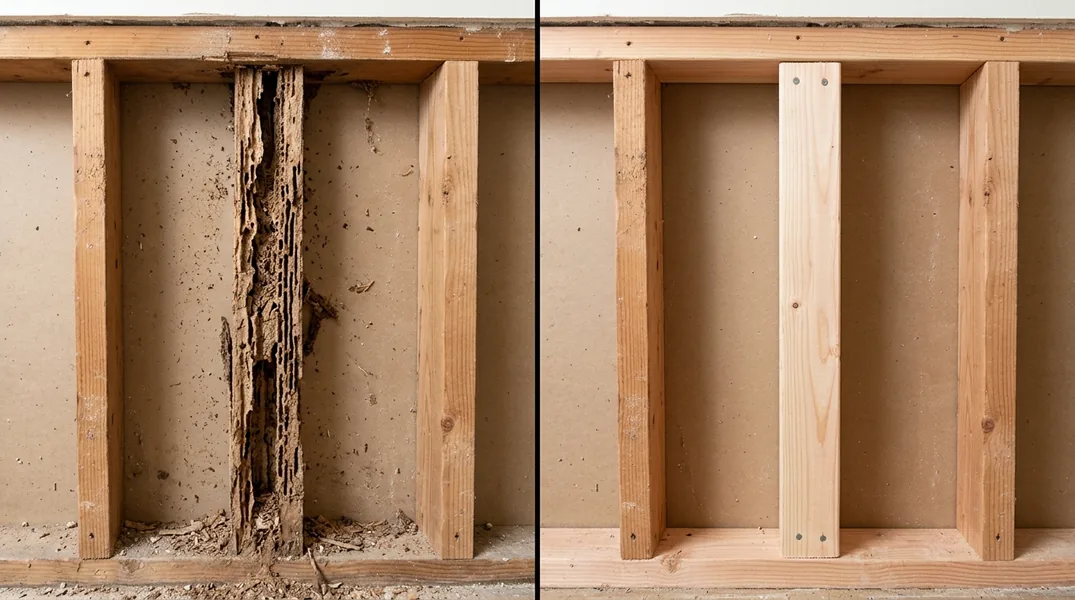
Less obvious but equally important are structural clues. Sagging floors, doors or windows that no longer close properly, and cracks in drywall can all indicate that termites have compromised the wood framing beneath. Moisture is termite's best friend, so check areas prone to leaks: bathrooms, kitchens, crawl spaces, and around exterior walls. If you notice soft spots in wood trim, peeling wallpaper, or a musty smell, termites may already be present. The sooner you identify these warning signs, the sooner you can arrange Termite Damage Repair and prevent catastrophic structural failure.
How Termite Damage Affects Your Home's Structure
Termite damage is not cosmetic. It's structural, and it's progressive. When termites tunnel through beams, joists, and wall studs, they remove the wood fibers that hold your house together. A beam that once supported 5,000 pounds might support only 2,000 after termite damage. That's a recipe for collapse, sagging ceilings, and catastrophic repair bills.
The most vulnerable areas are Floor Joist & Subfloor Repair zones. Termites love the warm, moist environment under a home. They hollow out floor joists from the inside, leaving only a thin shell of wood. You might not notice until someone steps through a soft spot in the floor or you see a sudden dip in the floorboards. Similarly, Beam Replacement & Load-Bearing Wall Removal work becomes necessary when termites have compromised critical support beams. Load-bearing walls cannot be repaired piecemeal. If termites have weakened them, the entire wall may need replacement, which is a major undertaking.
The longer termite damage goes unaddressed, the more expensive and invasive the repair becomes. Early intervention means you might replace a few joists. Delayed action means you're replacing entire support systems, which requires temporary bracing, engineering assessments, and potentially months of construction. Don't wait. If you suspect termite damage, call Oakland Carpentry at (510) 694-8835 for a professional evaluation.
Termite Damage Repair Cost in Oakland: What to Budget
The cost of Termite Damage Repair varies dramatically based on the extent of the infestation and the structural components affected. A small repair to a few feet of trim might run $500 to $1,500. But if termites have compromised major joists, beams, or wall framing, you're looking at $5,000 to $25,000 or more. In severe cases, especially in older Oakland homes with extensive damage, repairs can exceed $50,000.
Several factors drive the pricing. First is the location and accessibility of the damage. Repairs in a finished basement or behind walls cost more because contractors must open up the structure, remove damaged wood, and rebuild. Second is the type of wood involved. Replacing a rim joist is different from replacing a main support beam. Beams require engineering, temporary support systems, and often specialized equipment. Third is the age and condition of the surrounding wood. If termites have spread to multiple areas, the job becomes exponentially larger and more costly.
The good news is that early detection keeps costs down. A homeowner who catches termite damage in year one of an infestation might spend $2,000 to $5,000. That same homeowner waiting five years could face $15,000 to $40,000 in repairs. This is why annual inspections, moisture control, and prompt action are so valuable. If you need a detailed assessment and a transparent free estimate, Oakland Carpentry is ready to help.
Prevention and Next Steps: Protecting Your Oakland Home
Preventing termite infestation is far cheaper than repairing it. Start with moisture control. Termites need water to survive. Fix leaking gutters, ensure proper grading around your foundation so water drains away, and keep crawl spaces dry and well-ventilated. Remove wood-to-soil contact wherever possible. This means keeping wooden deck posts, siding, and trim at least six inches above ground. Mulch, leaves, and wood chips should be kept away from your foundation.
Second, eliminate food sources. Remove dead trees, stumps, and fallen branches from your property. Don't store firewood against your house. Have your home inspected annually by a professional, especially if you live in an older neighborhood where termite pressure is high. Many pest control companies offer annual monitoring and treatment, which is a worthwhile investment for peace of mind.
If you've already discovered termite damage or suspect it exists, don't delay. Wood Rot & Dry Rot Repair work often goes hand-in-hand with termite damage repair, since moisture and termites frequently appear together. Oakland Carpentry specializes in identifying, assessing, and repairing all types of wood damage. Call us at (510) 694-8835 or visit our website to request a free estimate. We'll inspect your home, explain what we find, and give you honest options for repair. The sooner you act, the sooner your home is safe and sound.
Looking for a professional carpentry contractor in Oakland? Oakland Carpentry responds fast for all your carpentry needs.
Get a Free QuoteOur services: Wood Rot & Dry Rot Repair · Termite Damage Repair · Floor Joist & Subfloor Repair