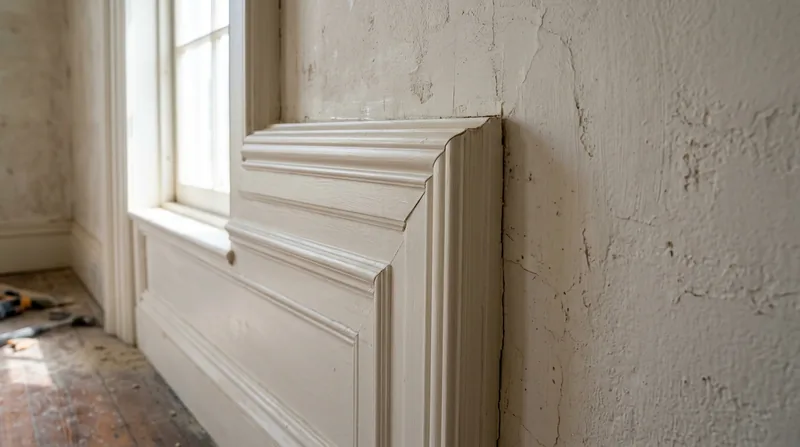




Finish & Trim Carpentry in Oakland demands precision that standard handyman work rarely delivers. Oakland's Victorians and Edwardian homes in West Oakland and Preservation Park sit on uneven foundations and settled framing from over a century of Bay Area seismic activity. Craftsman bungalows in Rockridge and the Oakland Hills, Spanish-style stucco-over-wood homes near Piedmont Avenue, and mid-century rebuilds on steep wooded hillside lots all share one reality: nothing is plumb or square. Every wall leans, every corner demands scribing, and every piece of casing, crown molding, or custom trim must be cut to the wall in front of us, not to a blueprint. We cut tight miters, hold even reveals, and install wainscoting, paneling, and built-ins that sit flush and true in homes where plumb and square are luxuries.
Why Finish & Trim Carpentry Matters in Oakland's Historic Homes
Oakland's building stock is a mix of architectural styles, each with distinct trim and finish details that define its character. Victorian crown molding profiles, Craftsman wainscoting, Spanish arches, and mid-century clean lines all require carpenters who understand the language of each era and can execute it faithfully. Poor trim work shows immediately: gaps at miters, uneven reveals, casing that doesn't follow the wall contour, or baseboard that rocks because the floor is not level. In Oakland's settled homes, a carpenter who can scribe, cope joints, and adapt standard trim to the actual geometry of the space is not optional, it is the difference between a job that looks built-in and one that looks installed.
- We scribe all casing and trim to fit the wall and door jamb geometry in front of us, eliminating gaps and ensuring tight joints even on out-of-square openings.
- We cut and fit crown molding with coped joints at inside corners so the profile sits flush and the joints are invisible, not butt-jointed and gapped.
- We install baseboard, wainscoting, and paneling that follows the actual plane of the wall, accounting for settling, lean, and floor irregularities common in Oakland's older homes.
- We hang interior doors and fit door frames to the actual opening dimension and angle, not to nominal sizes, so doors close smoothly and gaps are even all around.
- We build and install custom shelving, built-ins, and cabinetry that sit level and plumb despite the floor or walls they sit on being neither.
Attention to these details is what separates finish carpentry from rough framing, and it is what makes a home feel built rather than merely occupied.
Local example: A Victorian in West Oakland's Preservation Park had original crown molding in three rooms, each with a slightly different profile and each installed on walls that were no longer plumb. We matched the original profile, scribed every joint to the wall and ceiling plane, and coped all inside corners so the new work is indistinguishable from the original. That is finish carpentry in Oakland.
For more on how settled framing and structural issues affect trim work, see our guide to Framing & Structural Carpentry.
How We Execute Finish & Trim Carpentry in Oakland Homes
Our process starts with understanding the home's architectural era and the existing trim language, then adapting that language to the actual geometry of the space. We measure twice, cut once, and fit each piece in place before fastening. We use quality materials, stain and finish to match existing work where needed, and hand-sand joints so the transition is seamless. Whether you are restoring original crown molding in a Rockridge Craftsman bungalow or installing contemporary wainscoting in a remodeled kitchen, we approach the work with the same precision and respect for the home's character.
- We visit the site and measure the actual wall, door, and corner geometry in detail, identifying out-of-plumb, out-of-square, and settled conditions.
- We select materials and finishes that match or complement the existing trim and the home's architectural style.
- We cut all pieces to fit the space, scribing casing to wall contours and coping crown molding joints so they sit flush and tight.
- We install and fasten all trim, using finish nails or pocket screws depending on the application and desired appearance.
- We hand-sand joints and transitions, fill nail holes with color-matched putty, and stain or paint to match the surrounding work.
- We inspect the finished job for even reveals, tight joints, and clean lines before we consider it complete.
This methodical approach takes more time than nailing pre-made trim straight to the wall, but it is the only way to deliver work that looks built-in and will last decades without gaps, movement, or visible fasteners.
Example in Temescal: A homeowner in Temescal had interior doors that stuck and gaps between the door frame and the wall that were uneven all around. The wall was not plumb and the floor was not level. We removed the existing casing, shimmed and re-hung the door frame to plumb and square, then cut and fit new casing that follows the wall contour and sits flush all around. The door now closes smoothly and the trim looks original to the home.
Related work often includes Interior Door Installation & Repair and custom Custom Built-Ins & Shelving.
Finish & Trim Carpentry Methods and Approaches
| Approach | Description | Best For |
|---|---|---|
| Scribing and Custom Fit | We cut and fit each piece to the exact geometry of the wall, door, or corner in place, accounting for out-of-plumb and out-of-square conditions. | All trim work in settled Oakland homes, especially Victorians, Craftsman bungalows, and mid-century rebuilds where plumb and square are rare. |
| Coped Joints | We cut the profile of one piece to match the profile of the adjoining piece at inside corners, creating an invisible joint that does not open or close with seasonal wood movement. | Crown molding and baseboard at inside corners where a tight, seamless appearance is critical. |
| Miter and Biscuit | We cut 45-degree miters at outside corners and reinforce the joint with a biscuit or dowel for strength and alignment. | Outside corners on crown molding, baseboard, and panel trim where both sides of the corner are visible. |
| Built-in and Shelving | We design, build, and install custom shelving, cabinetry, and built-ins that are level and plumb regardless of the floor or walls they sit on. | Custom storage, window seats, bookshelves, and cabinetry that must sit flush and square in homes with settled or uneven floors and walls. |
| Finish and Stain Matching | We hand-sand, stain, and finish new trim to match existing work, ensuring color, sheen, and grain pattern are consistent throughout the room. | Restoration work in historic homes where new trim must blend seamlessly with original or existing finish carpentry. |
Each method is chosen based on the specific condition of the space, the architectural style of the home, and the desired final appearance. We explain our approach before we start and answer questions about why we recommend a particular method for your home.
Finish & Trim Carpentry Cost in Oakland: What to Expect
Finish and trim carpentry in Oakland typically starts at $550 for smaller projects such as installing pre-made door casing in a single opening, baseboard in a small room, or simple shelving. Larger projects, such as installing crown molding throughout a home, building custom built-ins, or restoring original trim in a Victorian, run from $2,000 to $8,000 or more depending on the scope, the amount of scribing and custom fitting required, the materials selected, and whether staining and finishing are included. The primary cost drivers are the linear footage of trim, the complexity of the wall and corner geometry, the time required to scribe and fit each piece, and the finish work.
A home with settled walls, out-of-plumb door frames, and irregular corners will cost more than a home with new, straight walls because each piece must be custom-fit rather than cut to standard dimensions. High-end materials, such as solid hardwood or custom profiles, add cost. Staining and finishing to match existing work also increases labor time and therefore price. We recommend getting 2 to 3 estimates from local carpenters so you can compare scope, materials, and labor costs. Our estimates are free and include a detailed breakdown of materials, labor, and timeline.
For a full pricing breakdown and examples of recent projects, visit our pricing page. Call us at (510) 694-8835 for a free, no-obligation estimate on your specific project.
Finish & Trim Carpentry Near Me: What Oakland Homeowners Should Know When Hiring
Hiring a carpenter for finish work is different from hiring a general contractor or handyman. Finish carpentry requires precision, attention to detail, and the ability to adapt to the actual conditions of your home rather than working from a standard plan. Before you hire, verify that the carpenter is fully insured and can provide references from recent finish carpentry projects in Oakland. Ask to see examples of crown molding joints, door casings, and built-ins so you can judge the quality of fit and finish. Understand what materials will be used, whether staining and finishing are included, and what the timeline is. If your project involves removing or altering trim in a historic home, confirm that the carpenter understands the architectural style and can match or restore original details. For projects that involve structural changes, such as removing a wall to open a room or significantly altering framing, a licensed structural engineer and a permit from the Oakland Building Department may be required, and a qualified carpenter will guide you through that process.
- Confirm that the carpenter is fully insured and carries liability and workers compensation coverage.
- Ask for references from at least two recent finish carpentry projects in Oakland or nearby areas and follow up with those homeowners.
- Request a detailed written estimate that breaks down materials, labor, and timeline so you can compare proposals fairly.
- Discuss the specific challenges of your space, such as out-of-plumb walls or uneven floors, and confirm that the carpenter has experience adapting trim to these conditions.
- Clarify whether the estimate includes finishing, staining, and paint or stain touch-up, or whether those are separate line items.
- Ask about the carpenter's approach to matching existing trim, especially if you are restoring a historic home or adding to existing work.
A good finish carpenter will ask questions, take time to understand your home and your vision, and explain their approach before they start. That conversation is the best indicator that you have found the right person for the job.
Ready to get started? Contact us for a free estimate or call (510) 694-8835 to discuss your project.
Finish & Trim Carpentry in Oakland: Pricing Guide
| Service | Price | Details |
|---|---|---|
| Single door casing or small trim project | Starting at $550 | One interior door casing, baseboard in one small room, or simple shelving with minimal custom fitting |
| Room-scale trim and casing | Starting at $1,200 | Crown molding, baseboard, and door casing in one room, accounting for scribing and custom fit to actual wall geometry |
| Whole-home crown molding or major built-ins | $3,500 to $8,000 | Crown molding throughout a home, custom built-in shelving, wainscoting, or restoration of original trim in historic homes |
| Complex or highly detailed restoration | On estimate | Victorian or Craftsman trim restoration, matching original profiles, or extensive custom work requires site visit and detailed proposal |
| Travel and setup | Included | No separate mileage or travel fee for Oakland and surrounding East Bay service areas |
| Free estimate | No charge | Response within 24 hours at (510) 694-8835, includes site visit, detailed scope review, and no obligation to proceed |
Indicative pricing, the exact cost depends on square footage, finish, and site access. Free personalized estimate within 24h at (510) 694-8835.


