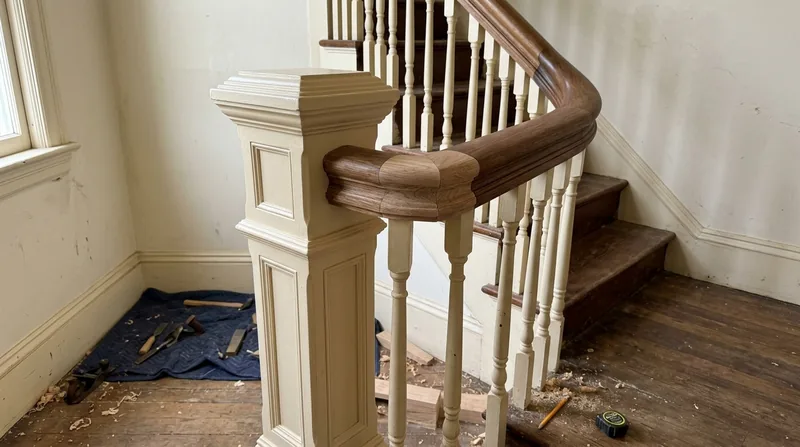




Oakland's Victorians and Edwardians climb their staircases every day, and those stairs have to hold. Whether your home sits in the fog-sheltered valleys of Rockridge, on the steep hillside lots of the Oakland Hills rebuilt after the 1991 firestorm, or in the settled flatlands of Deep East Oakland, stair and railing repair in Oakland means understanding wood movement, seasonal shrinkage, and the wear that comes from decades of use. We repair and rebuild the treads, stringers, balusters, and newel posts that hold these staircases together, from interior grand stairs in Preservation Park Victorians to cramped attic ladders in cottage bedrooms. When a stair feels loose, a baluster rattles, or a handrail pulls away from the wall, the fix starts with understanding what moved it. We secure what can be secured, replace what has failed, and explain the difference plainly. This page covers what stair and railing repair means in Oakland, how we approach it, and what it costs.
Why Stair and Railing Repair Matters in Oakland's Historic Homes
Oakland's building stock is old, and old stairs move. The Victorians and Edwardians of West Oakland and Preservation Park were built on settled foundations that shift with Bay Area earthquakes and ground moisture. The brown-shingle and Craftsman bungalows of Rockridge and Temescal sit on hillside lots where seasonal dry-summer wood shrinkage opens gaps and loosens joints. The mid-century homes rebuilt on steep wooded slopes after the 1991 Oakland Hills firestorm face ongoing settling and seismic stress. Stairs absorb all of that movement. A loose tread is not a small problem; it changes the walking rhythm and signals that fasteners have lost tension or that wood has shrunk around a joint. A wobbly baluster or newel post means the railing no longer holds its load. A handrail that pulls away from the wall can fail when someone needs it most.
- We tighten treads and risers by re-fastening or re-gluing stringers and blocking where wood has shrunk or fasteners have backed out.
- We replace balusters, newel posts, and handrails that have cracked, split, or rotted, matching the original profile and grain where the home's character demands it.
- We secure handrails and guardrails to meet current code requirements, ensuring they hold the load they are meant to hold.
- We repair attic ladders, basement stairs, and exterior entry stairs using the same attention to detail and structural integrity.
A staircase repair is not cosmetic work; it is a safety system that must function reliably every day.
Key info: Loose stairs and railings are common in Oakland's older homes because of seasonal wood shrinkage, settled framing from earthquakes, and the simple wear of 80 to 130 years of use. The fix is often a matter of re-fastening and tightening, not replacement. We assess each staircase on site and propose repair first, replacement only when the wood will not hold.
For guidance on stair and railing safety codes in Oakland, the Oakland Building Department provides permit and code information. Most stair repairs do not require a permit, but alterations to load-bearing stringers or changes to handrail height or spacing do.
How We Repair and Rebuild Stairs and Railings in Oakland
Every staircase repair starts with a walk-through and a diagnosis. We identify what has moved, why it moved, and whether the wood is sound enough to re-fasten or whether replacement is the honest answer. A Victorian stair with a loose tread may need only new fasteners and shims; a Craftsman stair with a rotted newel post needs the post replaced. We work from the existing stringer and structure, preserving the home's character and the original joinery wherever we can. We measure twice, fit carefully, and test the staircase for solidity before we call it done.
- We inspect the stringer for cracks, rot, or shrinkage and assess whether fasteners have backed out or joints have opened.
- We tighten or replace treads and risers, using screws or fasteners that resist future backing out and shims that take up gaps from wood shrinkage.
- We replace individual balusters or the entire baluster run if wood has cracked or split, matching the original pattern and grain.
- We secure or replace newel posts, which carry the handrail load and often show the first signs of movement or rot.
- We install or repair handrails and guardrails to code, ensuring they are lag-bolted or through-bolted to the stringer or wall framing.
The work is methodical and takes time, but the result is a staircase that feels solid under foot and a railing that holds its load.
Example: A 1920s Craftsman bungalow in Rockridge had a loose tread on the main staircase. The homeowner noticed it shifting when they stepped on it. We found that the stringer had shrunk, the fasteners had backed out, and the tread was no longer bearing evenly on the stringers. We re-fastened the tread with new screws and shims, tightened the balusters, and tested the whole run. The stair now feels solid and will hold for decades more. No replacement was needed.
For more on how we approach wood repair and when replacement is necessary, see our wood rot and dry rot repair page, which covers similar assessment and repair logic for structural and finish carpentry.
Stair and Railing Repair Methods: Repair vs. Replacement
| Approach | Description | Best for |
|---|---|---|
| Re-fastening and shimming | Tightening loose treads and balusters by replacing fasteners and adding shims where wood has shrunk or joints have opened. | Loose stairs with sound wood and no rot, common in settled Oakland homes. |
| Individual tread or baluster replacement | Removing and replacing a single tread, riser, or baluster while keeping the stringer and overall staircase structure intact. | One or two damaged pieces; preserves the original staircase and character. |
| Newel post or handrail replacement | Removing and installing a new newel post or handrail, matched to the original profile, grain, and finish where needed for character. | Posts or rails that have cracked, split, rotted, or are no longer secure; common in Victorian and Craftsman homes. |
| Full stringer replacement | Removing and rebuilding one or both stringers when rot, cracks, or structural damage makes the stringer unsafe or unable to hold fasteners. | Extensive rot or structural failure; less common but necessary when the stringer cannot be saved. |
| Attic ladder repair or replacement | Tightening or replacing attic stairs, which often loosen from repeated use and thermal cycling in unheated spaces. | Attic access stairs that are loose, squeaky, or difficult to operate; common in Oakland's older homes with finished attics. |
Each repair is tailored to the staircase and the home. We do not replace stairs as a default; we repair them when the wood is sound and the structure can be secured.
Stair and Railing Repair Cost in Oakland: What to Expect
Stair and railing repair in Oakland starts at $600 for a simple tightening job, such as re-fastening a loose tread or tightening balusters on a short run. From there, cost depends on what the staircase needs. A single baluster or tread replacement runs $400 to $800. A newel post replacement or handrail installation can range from $800 to $1,500. A full stringer replacement or a complex restoration of an ornate Victorian or Craftsman staircase can run $2,000 to $5,000 or more, depending on the extent of the work and whether matching original materials and finishes is required.
The main factors that move cost are the number of pieces that need repair or replacement, whether the wood is accessible or requires partial disassembly of surrounding trim, the complexity of matching original finishes and profiles, and whether the work includes code-compliant handrail installation or guardrail upgrades. Exterior stairs and basement stairs may cost less because they do not require the finish detail of a main interior staircase. Attic ladders and pull-down stairs are usually on the lower end of the range.
We provide a free estimate on site, and we explain the cost before we begin work. If you want a ballpark figure before calling, our pricing page provides more detail on how we structure estimates for different repair types. Getting 2 to 3 estimates is always smart; it gives you a sense of the market and helps you understand what different contractors are proposing.
Stair and Railing Repair Near Me: What Oakland Homeowners Should Know When Hiring
Hiring a carpenter for stair and railing work means finding someone who understands both structural integrity and the character of your home. A loose stair is not a handyman job; it requires diagnosis, proper fastening, and knowledge of how to work with old wood and settled framing. Oakland's homes are old, and old staircases have their own logic. A good carpenter will explain what has moved and why, propose repair before replacement, and respect the original design and materials of the home.
- Ask whether the carpenter has experience with your home's era and style, whether Victorian, Craftsman, mid-century modern, or post-war bungalow.
- Request references from other Oakland homeowners and ask specifically about stair and railing work or structural repairs.
- Clarify whether the estimate includes finishing work, such as staining or varnishing, and whether it covers code compliance for handrails and guardrails.
- Confirm that the carpenter is fully insured and understand what that insurance covers, such as liability and workers compensation.
- Ask about the timeline and whether the work will require partial access to your home or disruption to daily use while stairs are being repaired.
A staircase repair is a commitment to safety and longevity. Choose a carpenter who takes it seriously and explains their work in terms you can understand.
If you are ready to get started, contact us for a free estimate. We respond within 24 hours at (510) 694-8835, and we are happy to discuss your stairs and answer questions before you decide to book.
Stair & Railing Repair in Oakland: Pricing Guide
| Service | Price | Details |
|---|---|---|
| Tread or baluster tightening | Starting at $600 | Re-fastening loose treads, tightening balusters, and shimming joints where wood has shrunk or fasteners have backed out. |
| Single tread, riser, or baluster replacement | Starting at $400-$800 | Removing and installing one damaged piece while keeping the staircase structure intact and matching original materials and finish. |
| Newel post or handrail replacement | Starting at $800-$1,500 | Replacing a newel post or handrail with code-compliant installation, matched to original profile and grain where needed for character preservation. |
| Full stringer replacement or complex restoration | On estimate | Extensive repairs, full stringer replacement, or ornate Victorian or Craftsman staircase restoration require on-site assessment before pricing. |
| Travel and estimate | Free | No charge for travel within Oakland and surrounding areas, and no obligation to book after receiving your free estimate. |
Indicative pricing, the exact cost depends on square footage, finish, and site access. Free personalized estimate within 24h at (510) 694-8835.


