Why Is My Floor Sagging? Common Causes in Older Oakland Homes
If you own an older home in Oakland, a sagging floor is more than just an annoyance. It's a warning sign that something structural needs attention. The most common culprit behind sagging floors is deterioration of the wooden support system beneath your home, particularly the floor joists and beams that carry the weight of everything above them.
Wood Rot & Dry Rot Repair is one of the leading causes of floor sag in Oakland's older housing stock. When moisture penetrates wooden structural members, rot begins to compromise the wood's integrity. What once was solid timber becomes soft and crumbly, losing its load-bearing capacity. This typically happens in basements, crawl spaces, or areas with poor ventilation and moisture control. Over time, as the wood weakens, the floors above gradually settle and sag.
Another significant cause is Termite Damage Repair situations. Termites silently hollow out wooden joists and beams from the inside, leaving only a thin shell. A floor can look fine one day and suddenly sag when the remaining wood finally gives way. Pest damage combined with moisture creates the perfect storm for structural failure.
Foundation settlement, inadequate support spacing, and the natural aging of wood also contribute to sagging. Some older homes were built with joists spaced too far apart or with undersized beams that were never adequate for the load. As the home ages and wood loses its strength, these inadequacies become apparent.
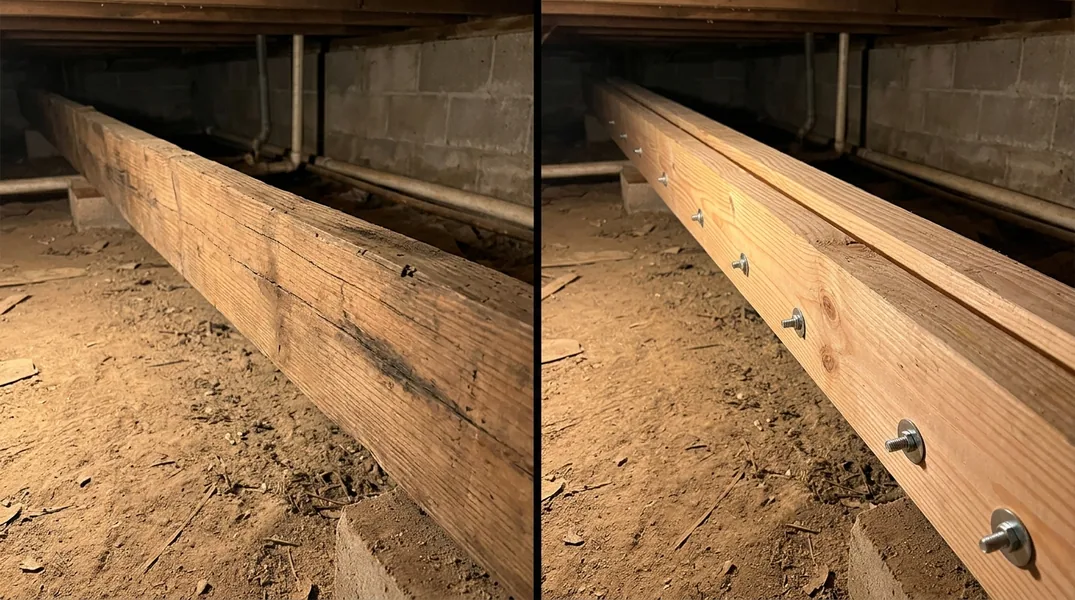
Understanding Floor Joist Repair and Sistering Floor Joists
When a floor joist is damaged but not completely failed, repair is often possible through a process called sistering. Sistering involves fastening a new or reinforced wooden member alongside the damaged joist to share the structural load. This technique is one of the most effective solutions for addressing sagging floors caused by rot, termite damage, or wood fatigue.
The process begins with a thorough inspection to identify which joists are compromised and to what degree. A qualified carpenter will assess whether the joist can be partially salvaged or needs complete replacement. If sistering is viable, a new joist (or sometimes a steel reinforcement beam) is carefully positioned next to the damaged joist and securely fastened with bolts, nails, or screws spaced at code-approved intervals. This distributes the weight across both members, restoring structural integrity.
Floor Joist & Subfloor Repair work requires precision and knowledge of local building codes. The sister joist must be properly sized, correctly positioned, and installed to ensure it actually carries load. Many DIY attempts at sistering fail because the new joist isn't adequately fastened or sized, or because the underlying cause of the damage isn't addressed. Moisture problems, for example, must be corrected, or the new joist will eventually rot as well.
In cases where joists are severely compromised or where multiple joists in a row are damaged, more extensive solutions may be needed. This might involve installing a new beam or replacing an entire section of the floor system. The key is ensuring that whatever repair is made addresses both the symptom (the sag) and the root cause (moisture, pests, or design inadequacy).
Sagging Floor Repair Solutions: From Minor to Major Work
The right repair solution depends on the extent of the damage, the cause, and your home's structural design. For minor sags affecting only one or two joists, sistering may be sufficient. The damaged section is reinforced, moisture is controlled, and the floor is brought back to level. This is typically the most cost-effective approach when the damage is caught early.
For more extensive damage, Beam Replacement & Load-Bearing Wall Removal work may be necessary. If the main beam supporting multiple joists has failed, that beam must be replaced. This is a more complex undertaking that often requires temporary support posts while the new beam is installed. In some cases, homeowners take the opportunity to remove a load-bearing wall or reconfigure the support system to improve the home's layout and functionality.
Addressing the underlying cause is equally important as the structural repair itself. If rot is present, the source of moisture must be identified and eliminated. This might mean improving crawl space ventilation, installing a sump pump, repairing gutters and downspouts, or waterproofing basement walls. If termites were the culprit, pest control treatment and prevention measures are essential. Failing to address these root causes means the repair will eventually fail again.
The timeline for repair varies widely. A simple sistering job might take a few days, while a full beam replacement could take one to two weeks. Temporary support structures may need to stay in place for several days or weeks to allow the repair to fully set and for any necessary inspections to be completed.
Sagging Floor Repair Cost in Oakland: What to Budget
Understanding the pricing for sagging floor repair is crucial for homeowners planning their budget. Costs vary significantly based on the severity of the problem, the number of joists affected, accessibility, and whether the underlying cause requires additional remediation work.
A basic sistering repair for one or two joists in an accessible crawl space might range from $1,500 to $3,500, depending on joist length and the quality of materials used. If multiple joists need sistering or if the work requires temporary support structures and additional bracing, expect costs between $4,000 and $8,000. A full beam replacement, especially in a load-bearing location, can easily exceed $10,000 to $20,000 or more, particularly if the beam is long or if the home's configuration makes installation complex.
Additional costs arise when addressing the root cause. Moisture remediation, such as installing or upgrading a crawl space vapor barrier, improving drainage, or installing ventilation, might add $1,000 to $5,000. Termite treatment and prevention measures could add another $500 to $2,000. These aren't optional extras; they're investments that protect your repair work and prevent future problems.
The best way to understand your specific situation and get an accurate estimate is to schedule a free estimate with Oakland Carpentry. A professional inspection will identify exactly what needs to be done, why, and what it will cost. You can also call us at (510) 694-8835 to discuss your sagging floor concerns and get preliminary guidance.
When to Call a Professional: Signs You Need Help Now
Not every minor floor imperfection requires immediate professional attention, but certain signs indicate that you should call a carpenter without delay. If you notice a sudden change in floor levelness, bouncy or springy floors, or visible gaps between walls and floors or ceilings, these are red flags. Doors and windows that stick or won't close properly can also signal structural movement. Visible rot, soft wood, or a musty smell in the crawl space or basement are definitive indicators that damage is present.
If you've noticed sagging that's getting worse, or if you're seeing new cracks in drywall or plaster, the problem is likely progressing. Waiting often makes repairs more expensive because the underlying structural damage continues to spread. What might have been a manageable repair of two joists can become a major beam replacement if left unaddressed.
Oakland Carpentry has extensive experience diagnosing and repairing sagging floors in older homes throughout the area. Our team understands the unique challenges that older construction presents and knows what to look for. We can often identify problems that homeowners and even some general contractors miss. If you're concerned about your floors, don't wait. Contact us at (510) 694-8835 or request a free estimate to have your home evaluated by a professional.
Prevention and Long-Term Floor Health
While not every sagging floor can be prevented, many can be if homeowners take proactive steps to maintain their homes. The most important factor is moisture management. Keep your crawl space or basement dry by maintaining gutters and downspouts, grading soil away from the foundation, and ensuring adequate ventilation. If you live in a particularly wet area or have a history of moisture problems, consider installing a sump pump or improving the vapor barrier in your crawl space.
Regular inspections are your first line of defense. Walk your crawl space or basement annually, looking for signs of water intrusion, soft wood, or pest activity. Catch problems early when they're easier and cheaper to fix. If you notice any sagging, springiness, or other changes in your floors, have a professional evaluate the situation promptly.
Maintaining proper ventilation in crawl spaces and attics helps prevent the moisture buildup that leads to rot. Keeping the area around your home clear of debris and vegetation reduces pest habitat. These simple preventive measures can add decades to the life of your home's structural system and help you avoid costly repairs down the road.
Looking for a professional carpentry contractor in Oakland? Oakland Carpentry responds fast for all your carpentry needs.
Get a Free QuoteOur services: Wood Rot & Dry Rot Repair · Termite Damage Repair · Floor Joist & Subfloor Repair