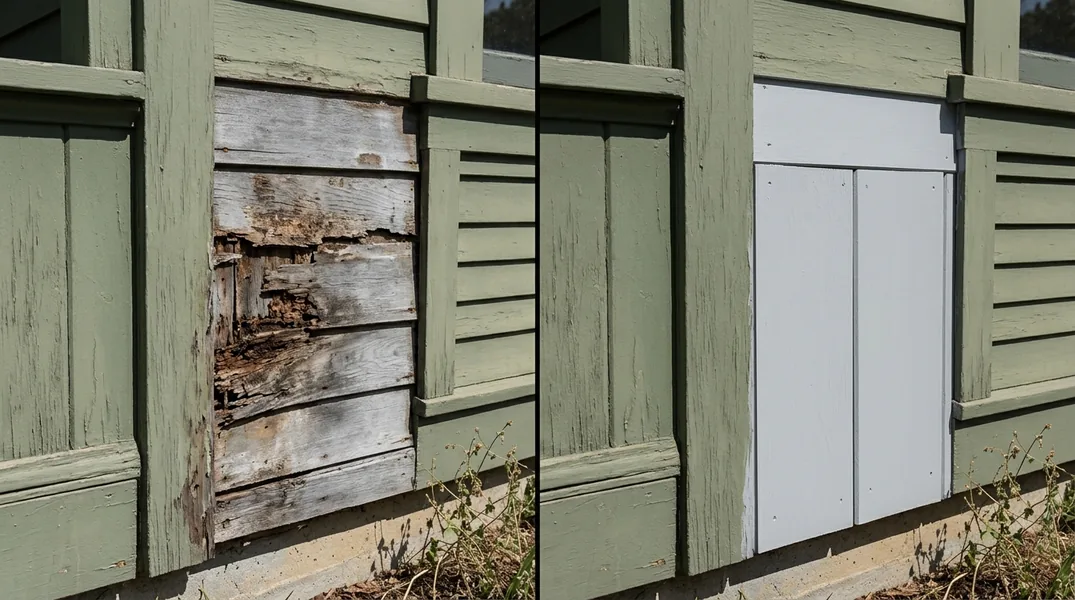
Dry Rot vs Termite Damage: Understanding the Enemy
If you own a home in Oakland, the last thing you want to discover is that your wooden beams, joists, or framing are under attack. Two of the most common culprits behind wood deterioration are dry rot and termite damage, yet they are fundamentally different problems requiring different solutions. Understanding the distinction between dry rot vs termite damage is the first step toward protecting your investment and avoiding costly repairs down the road.
Dry rot is a fungal disease that thrives in damp conditions and breaks down wood from the inside out, while termites are living insects that actively consume wood as food. The confusion between these two problems is understandable because both can cause severe structural damage, but the underlying causes, warning signs, and treatment approaches differ significantly. Misidentifying the problem could lead to ineffective repairs and further deterioration of your home's structural integrity.
What Does Wood Rot Look Like? Identifying Dry Rot
Dry rot, despite its name, requires moisture to develop and spread. It appears as a fungal decay that turns wood a dark brown color, and the affected wood becomes brittle and crumbly. When you press your finger or a screwdriver into wood affected by dry rot, it will often crumble or splinter easily rather than resisting pressure. What does wood rot look like in its early stages? You might notice a dusty, powdery residue on the surface, or a faint musty smell emanating from affected areas, particularly in basements, crawl spaces, or around windows where moisture accumulates.
One distinctive characteristic of dry rot is that it can spread through masonry and even non-wooden materials if conditions remain damp enough. The fungus produces thread-like structures called mycelium that extend across surfaces, and it may develop fruiting bodies that resemble mushroom caps or pancakes. Unlike termite damage, which creates clean tunnels and galleries, dry rot tends to create a more uniform, cube-like cracking pattern as the wood loses its structural integrity. If you spot these signs in your Oakland home, particularly in areas with poor ventilation or water intrusion, dry rot may be the culprit.
Signs of Termite Damage in Wood: What to Look For
Signs of termite damage in wood are often more subtle than dry rot in the early stages, but they progress rapidly once an infestation takes hold. Termites create hollow galleries and tunnels within the wood as they feed, leaving behind thin walls of wood that may appear intact on the surface but are actually hollow underneath. If you tap on affected wood, it may sound hollow or papery. Unlike dry rot, termite damage typically follows the grain of the wood and creates a network of interconnected tunnels that can weaken structural members significantly.
Look for mud tubes along foundation walls, wooden supports, or crawl space beams. These pencil-thin tubes are constructed by termites to maintain moisture as they travel between the soil and wood sources above. You might also notice discarded wings near windowsills or doors, which indicate that termites have been swarming. In some cases, you may see small piles of sawdust-like frass (termite droppings) beneath infested wood. The presence of live termites themselves, though rare to spot, is obviously a clear indicator of active infestation.
Key Differences Between Wood Rot and Termite Damage
Understanding the key differences between these two problems helps homeowners take appropriate action. Dry rot is caused by fungal growth and requires moisture, humidity, and poor ventilation to thrive. It spreads relatively slowly compared to termites and is non-living. Termites, by contrast, are living insects that actively consume wood for food and can spread rapidly through a structure. A termite colony can cause extensive damage in just a few years, while dry rot may take longer to compromise structural integrity but can affect larger areas of a home over time.
The appearance of damage also differs notably. Dry rot creates a uniform, cube-like cracking pattern and a powdery, dark brown appearance. Termite damage leaves clean, smooth galleries and tunnels with thin walls between them. Dry rot typically occurs in areas of high moisture, such as basements, crawl spaces, or around water-damaged areas. Termites can establish themselves almost anywhere in a home, though they prefer wood in contact with soil or areas with high humidity. Additionally, dry rot can spread through non-wooden materials like masonry, while termites require wood as a food source and cannot spread through concrete or stone.
When to Call a Professional for Wood Rot & Dry Rot Repair Near Me
If you suspect either dry rot or termite damage in your home, professional assessment is crucial. Attempting to identify and treat these problems without expertise can result in incomplete repairs and ongoing structural damage. Oakland Carpentry specializes in diagnosing wood damage and determining the exact cause, whether it's fungal decay or insect infestation. Our team can inspect affected areas thoroughly and recommend the appropriate course of action. Wood Rot & Dry Rot Repair requires not only removing the damaged wood but also addressing the underlying moisture or environmental conditions that allowed the problem to develop in the first place.
For termite damage, professional Termite Damage Repair involves coordinating with pest control specialists to eliminate the colony and then repairing or replacing compromised structural elements. In some cases, damage extends to critical structural components like Floor Joist & Subfloor Repair or load-bearing beams, which may require Beam Replacement & Load-Bearing Wall Removal. The complexity of these repairs makes professional intervention not just recommended but essential for your home's safety and structural soundness.
Wood Rot & Dry Rot Repair Cost in Oakland: What to Budget
The cost of repairing wood rot or termite damage varies widely depending on the extent of the problem, the location of the damage, and the structural components involved. A small area of surface-level dry rot might cost less to repair than extensive termite damage affecting multiple structural members. Factors that influence pricing include the amount of wood that needs to be removed and replaced, whether additional structural reinforcement is necessary, and the accessibility of the affected areas. Damage in crawl spaces or attics may be more expensive to repair than damage in easily accessible areas.
Rather than guessing at costs, the best approach is to contact Oakland Carpentry for a professional evaluation and free estimate. Our team will assess the damage, determine whether it's dry rot, termite damage, or another issue, and provide you with a transparent quote for the necessary repairs. Early detection and prompt action typically result in lower repair costs, so if you notice any signs of wood damage, don't delay in seeking professional advice. Call us at (510) 694-8835 to schedule your inspection today.
Looking for a professional carpentry contractor in Oakland? Oakland Carpentry responds fast for all your carpentry needs.
Get a Free QuoteOur services: Wood Rot & Dry Rot Repair · Termite Damage Repair · Floor Joist & Subfloor Repair